
In this video, I talk about why contacts are important in different situations and what makes them valuable. I explain how players can use these relationships to their advantage and reach their goals.

In this video, I talk about why contacts are important in different situations and what makes them valuable. I explain how players can use these relationships to their advantage and reach their goals.


Here’s something I don’t hear discussed very often: Gary Gygax, never actually expected DMs to invent every NPC from scratch. Because sometimes you just need a quick glance at something for an NPC. Not saying that every NPC will turn into something, but heck, it's nice to have something ready on paper.


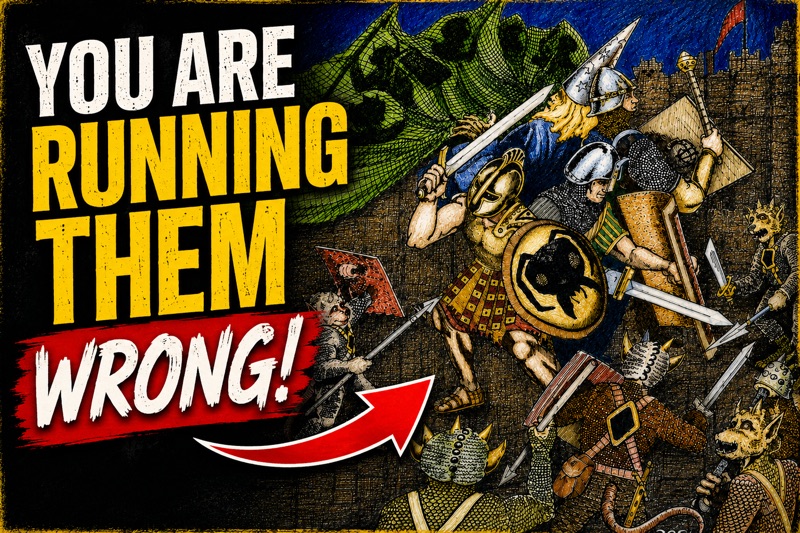
In today’s episode of the podcast, I decided after a suggestion from a listener, Christian , who asked if I give my thoughts about Tucker’s Kobolds. Below I put the original article from Dragon #127. It was basically an editor’s note type thing, and it was a story about a DM named Tucker and how he used the Kobolds.


Wandering monsters were never just random fights. In D&D, they created pressure. They drained resources. They punished wasted time. They stopped players from resting after every encounter and reminded everyone that the dungeon was alive.


Around May 27th, I received this notification from VidIQ, about reaching 12k subscribers on Youtube and I was super excited to share it, but I wanted to wait a little bit until I had reached a little over 12k before celebrating. Would suck if I announced it and then a few people decided to unsubscribe for whatever reason and it dipped me back under 12k. Thankfully that didn't happen.

Low Intelligence does not make evil stupid. It changes how that evil shows up at the table. In this AD&D episode, I talk about why low Intelligence monsters and characters can still be dangerous, organized, loyal, cruel, and effective. Not every evil creature is a mastermind. Some are enforcers, raiders, followers, guards, and brutes who understand power, fear, orders, and punishment well enough to be a real threat.

Gnolls in AD&D are more than just hyena men with axes. They sit in this strange place in the game where people underestimate them right up until the moment the party realizes they are being hunted. In this episode, I break down what makes gnolls work so well in old school play, where they came from, how Gary Gygax shaped them in AD&D 1st Edition, and why they feel different from orcs, goblins, and other common humanoids.

I just caught wind of this news, and well, frankly, I am kind of excited about this... As I've been reading Dragonbane. The game really impressed me, and I am thankful to those that pointed it out and highly suggested I read it.


Lawful Evil isn’t stupid. I’ve run a lot of villains who were smart, but I’ve also let “lawful evil” drift into cartoon territory. Iron-fisted tyrant. Obsessed cult leader. Someone the party can just stab and walk away from. But the truth is, a real lawful evil force plays the long game. It doesn’t waste resources. It bends the rules without breaking them. It thrives because people let it.
 |
| Colorized? |
I saw this and thought about how often this spell gets ignored. Most players use it to see in the dark. Boring. I want it to feel dangerous. I want it to make someone pay.


They do not fight to the death. Most things should not.
You roll morale after the first losses. Not at the end. Not when it is obvious. Early. That timing matters. One creature drops. Maybe two. Now you check.
