

The Torch Check, When “One More Room” Goes Bad
Let them decide. Let them mess up. Let them learn

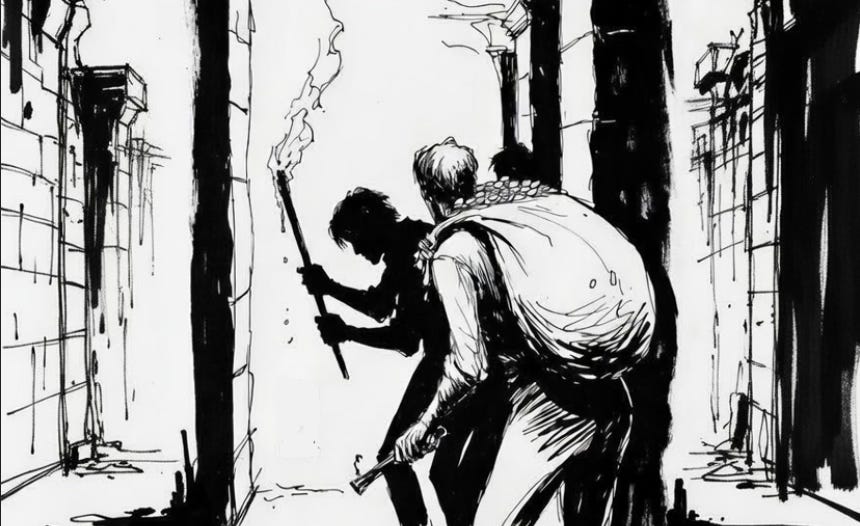
Most groups do this. They clear a room and then someone says, “One more room.”
That line gets people killed. So here’s what I used to do and I got away from it, but now I’ve been drifting back towards it as it makes the game feel more alive to me. I make a fast torch check. I say the numbers out loud. Light, time, and carry. Then I shut up. Light is how much torch or lantern you have left. Time is how long you’ve been in here. Carry is how weighed down you are.
It sounds boring. It is not boring at the table.
Because the dungeon stops feeling like a video game. It starts feeling like a place that wants you to mess up. When the party says “one more room,” I do it like I’m ringing up a bill.
“Your torch has 24 minutes left.”
“Lantern oil has 2 hours left.”
“You have 7 spikes.”
“You are carrying 3,200 coins, so you move slower.”
That’s it. No speech. No warning voice. Just facts. Now your players have to decide. Door or out. Greed or safety. Fast and light, or slow and rich. And the cool part is this. They feel like it’s fair. If they push deeper and the light runs out, nobody can say you tricked them. They heard the number. They chose it anyway.
It also makes the party ask better questions. Not “what’s in the room,” every time. You start hearing stuff like:
Can we hear breathing on the other side?
Is there a draft?
Do we smell smoke?
Is the floor wet?
They stop opening doors like it’s nothing. They listen. They argue. They mark walls. They plan. And your wandering monster roll suddenly matters. Time matters now. So the roll matters.
Thinking, here is a situation I could see happening:
Party is four characters. Level 2 or 3. Two hirelings. They are in a skinny hallway. There’s a door that looks untouched. The thief wants it.
Cleric goes, “one more room.” You do the torch check.
Torch has 8 minutes.
They have one fresh torch left.
Fighter is moving slow because he grabbed a stone head statue. Bad choice, but hey it looked valuable. They have no mule down here, so they carry it all.
Then you ask one thing. “Still want the door.”
If they say yes, you don’t punish curiosity. You pay them first.
The room has a small box. 120 silver. A scroll case. Nice. Then the torch dies while the thief is still working the lock. It happens. It’s a clock.
Now they choose again.
Light the last torch and now you are on your last light.
Go dark and try to feel your way out, which is scary and slow. Either way, you roll wandering monsters like normal. If something shows up, you didn’t force it. Time did. They bought time with light, and they ran out.
If they say no and leave the door, they still “win.” They get out clean. They keep the last torch for next time. And that unopened door turns into a hook. Next session they come back ready. More torches. More sacks. More hands.
That’s the whole loop.
Plan, risk, escape, repeat.
THAT’S HOW OLD SCHOOL IS PLAYED. Surviving another day, instead of charging around like you are superheroes with nothing to fear. AD&D and just about all of old school games play like this.
But this torch check makes hirelings matter.
How?
Extra hands carry stuff.
Extra hands hold lights.
Extra hands stand guard.
So the party will start using hirelings like tools.
“You hold the lantern.”
“You go first.”
“You carry the coins.”
If they treat hirelings bad, you don’t need a big speech. Just let it show later.
The hireling quits, the hireling lies, the hireling sells info to a rival group.
Or the hireling runs when things go bad, and takes the last torch with him!
Nothing funnier from a DM stand point when the party creates an NPC like dirt and he finally waits ‘till the perfect moment.. and revenge!
It’s a simple system. It creates hard choices without you having to “be mean.”
A warning though. Keep it quick. If you make the torch check take two minutes every time, players will tune out. Keep it short. One sentence per thing. Light. Time. Carry.
Then let them decide. Let them mess up. Let them learn.
Support me?

