

Running Planar Adventures Without Killing Your Campaign | Manual of the Planes Part 2

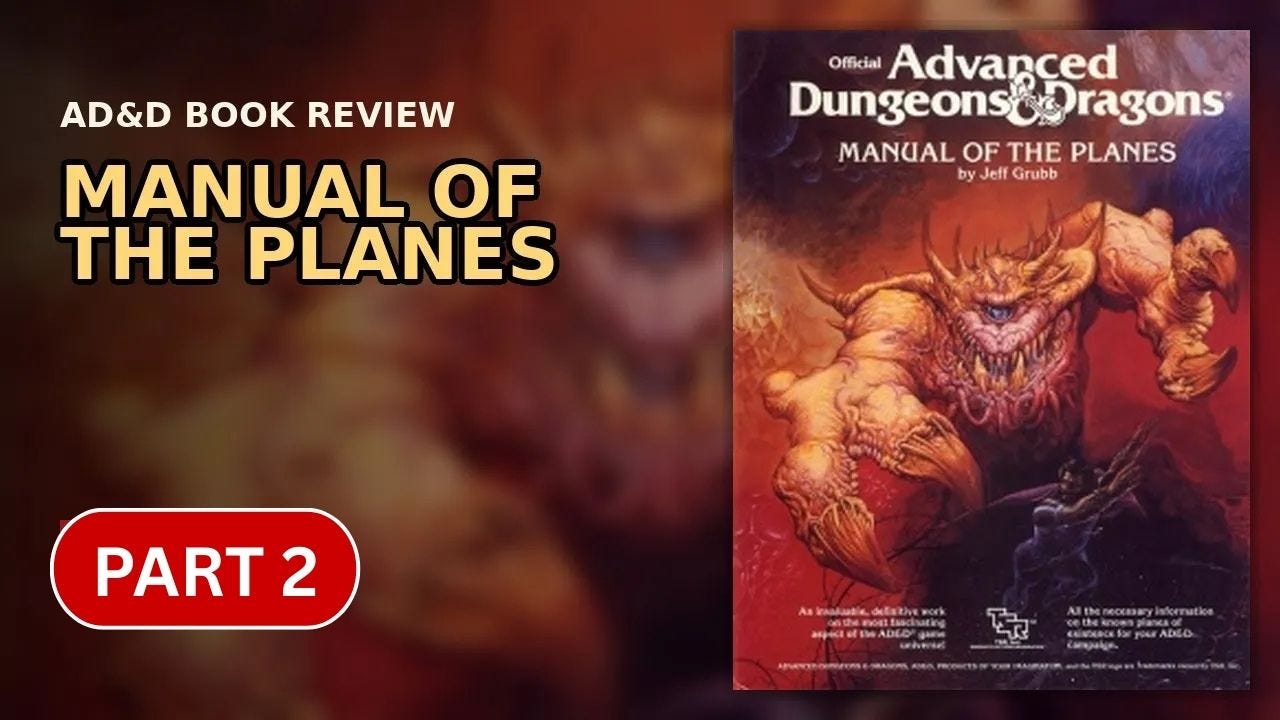
This is Part 2 of the Manual of the Planes deep dive. Part 1 covered what the book is and why it matters. This video is about actually running planar adventures at your table without turning them into a TPK or a rules lecture.
How do you introduce planar travel without making it feel casual? How do you start small with border regions before throwing characters into full exposure? How do you use environment as your primary weapon instead of relying on exotic monsters? This video covers all of that. Rest isn’t guaranteed in the planes. Safe zones should be rare and memorable. Magic should feel unpredictable, not useless. Planar NPCs matter more than monsters because they give players something to bargain with instead of always fighting.
The Manual of the Planes teaches restraint. Planar adventures are punctuation, not paragraphs. They should interrupt your campaign, leave marks, and be remembered. Success isn’t total victory. It’s escape, containment, buying time. If your players walk away cautious and unsure whether they want to go back, you did it right.
This is practical GM advice for running adventures in the Ethereal, Astral, Inner Planes, and Outer Planes without losing control of your campaign. We talk about landmarks over maps, time distortion as a consequence tool, hard choices that matter because delay is dangerous, and failure states short of death that create story instead of ending it.
Shoutout to DM Dan for requesting this breakdown.
Part 1:

This was a great dive into planar adventures, very informative.
I often consider the main adventure seed of the outer planes to be faction conflict, the deities and denizens of each plane in constant war (hot or cold, political, guerilla, etc) with each other, and ripe for the characters to become part of that scene, my favourite is the Gith internecine war often fought out on the astral plane.