

AD&D Dual Classing: Power Move or Painful Mistake?

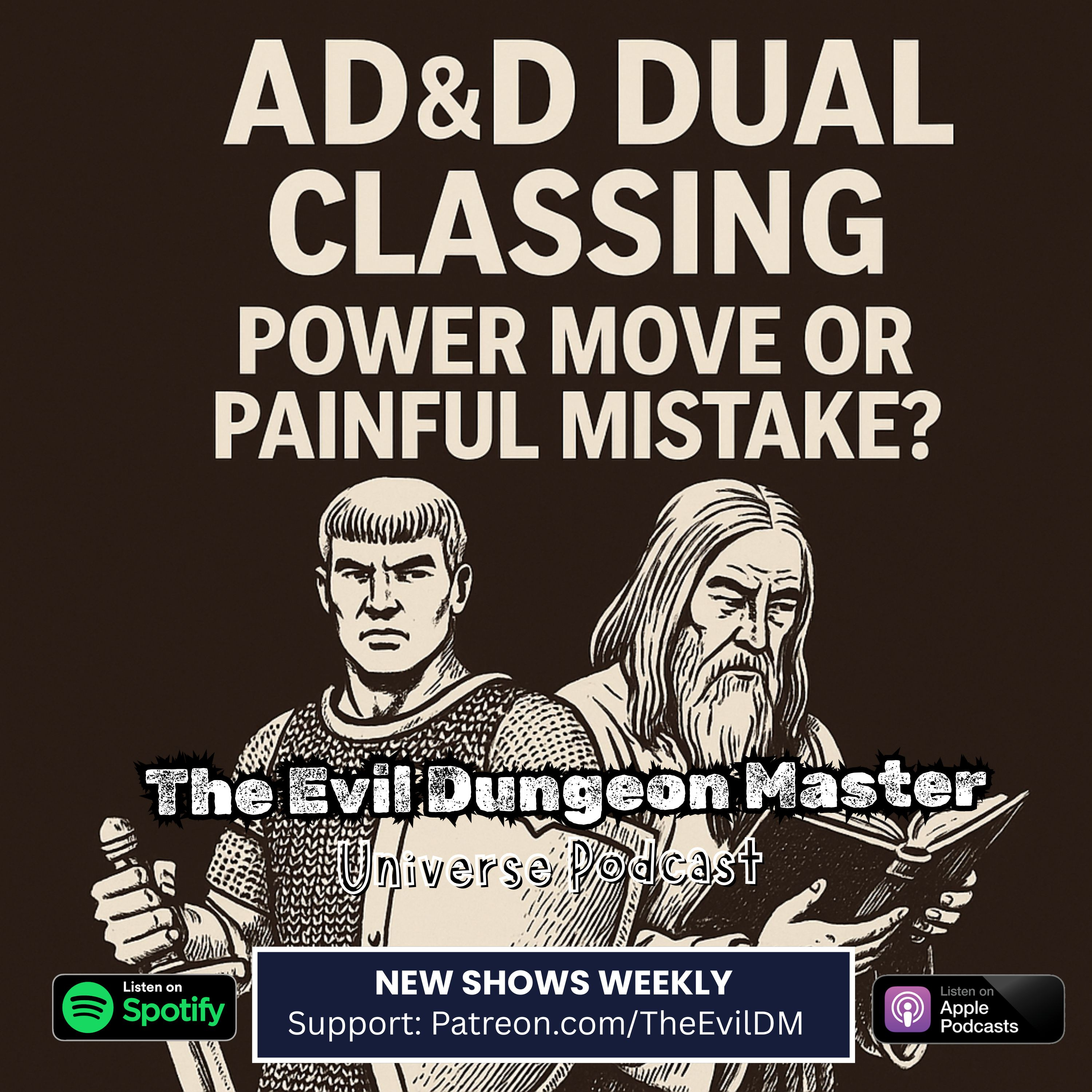
Dual classing in AD&D is one of those rules everyone knows about but not a lot of people actually use. You read it once, nod, and then never touch it again. Why? Well this podcast gets into the whys.
Here’s how it works. You start in one class. Then one day, you decide you’re done. You hang it up. No more levels. From that point forward, you switch to a new class and start over at level one. You keep your hit points but lose access to everything else. Your fighter can’t fight. Your thief can’t backstab. Your ranger can’t track.
Until you level up in your new class past your old one. Then it all comes back. Now you’re casting spells and swinging swords again. Congratulations... you survived the grind.
But here’s the catch. You need serious stats to even qualify. At least a 15 in your old class’s main stat and a 17 in your new one. That alone rules out most characters rolled the old-school way. And even if you have the numbers, the risk is real. One slip, one moment where you pull out your old weapon or use a former skill, and the XP from that adventure is gone. Wasted.
So why bother?
Because if you plan it right, dual classing turns you into a monster. Fighter into mage. Thief into cleric. Cleric into illusionist. You get all the early level benefits, stack it with the full power of your new class, and become a one-person party. But only if you have the patience and discipline to get there.
It’s not for casual players. It’s not for people who want instant power. It’s for folks who want a real story arc. Someone who gave up their past to start over. Maybe they failed their order. Maybe they saw something that changed their path. Maybe they just got tired of swinging steel and wanted something quieter. Until the spells start flying.
So yeah. It’s risky. It’s clunky. But it’s pure AD&D.
You earn the power. You suffer for it. Then you show everyone why it was worth it.
